Cagot
Legado en los huesosCagot is the name used by a man who drew Beñat Zaldúa into church desecrations and, investigators came to suspect, connected those attacks to a wider pattern of murders marked by the removal of victims’ arms. His identity remains unresolved in the available account, but Beñat’s description gives him a distinctive physical feature: half the fingers on his right hand were missing.
Identity and Recruitment
Cagot first contacted Beñat through a blog. Beñat initially believed he had found someone who shared and defended his theories; only as the church attacks continued did he realize that events were moving beyond what he had intended. The discovery that human bones had been left beside the altar particularly unsettled him, because it had nothing to do with the ideas he thought he was pursuing.
Beñat said he had seen Cagot face to face only during the desecrations. The alias, the damaged right hand, and those brief encounters supplied investigators with a description to circulate, but did not establish the man’s true identity. The contrast between Beñat’s early sense of ideological affinity and his later alarm marks the recruitment as a gradual manipulation: what had seemed like shared theory became participation in acts whose purpose and consequences Beñat no longer accepted.
The Signature Across the Murders
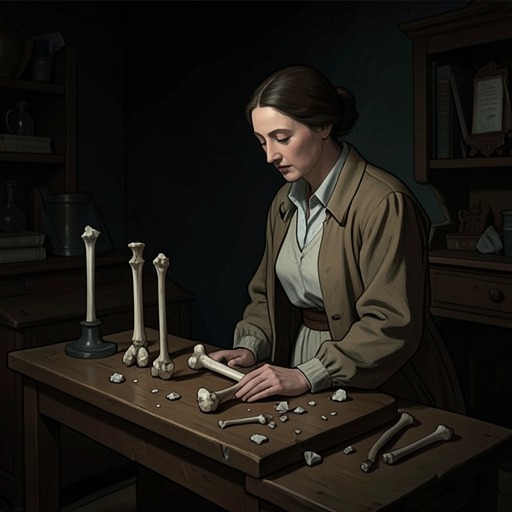
Investigators initially had three cases and suspected there could be more. The known offenders appeared to fit a familiar profile: each was a violent, impulsive man with a close relationship to the victim and a history of prolonged abuse, often compounded by alcohol or drugs. What did not fit was the same postmortem act in each case: an arm was amputated, and the limb disappeared. In one examination, the cut was described as running from the elbow and made with a toothed but sharp instrument, such as an electric carving knife or jigsaw. The repeated removal was not simply another detail of the killings; it was the element that made otherwise recognizable domestic murders seem connected.
The case of Johana Márquez sharpened that distinction. Jasón Medina confessed to forcing and killing his stepdaughter and to violating her body afterward, but he was perplexed when asked about the missing arm. He said that after killing her impulsively, he returned home for a rope, intending to imitate a murder he had read about; when he came back, the arm was already gone. He had also felt watched and wondered whether Johana’s ghost was following him. His account separated the killer who committed the assault and murder from the unseen person who took the limb, suggesting that the trophy-taking required a second presence rather than being part of Medina’s plan.
A word scratched into a prison wall offered another link. After a separate murderer from Logroño died by suicide in his cell, investigators learned that he had left the same message, written in the same distinctive hand: TARTTALO. The word had been carved into the plaster with a toothbrush handle, and its spelling was unusual enough to strengthen the comparison. The details of Johana’s amputation had been withheld from the press, making simple imitation from published reporting an unlikely explanation for the shared pattern. Investigators therefore treated the arm’s removal and the repeated inscription as a possible individual signature, distinct from the offenders’ more ordinary patterns of domestic violence.
The timing of the theft pointed toward a deliberate hunter of offenders. Because Medina had acted impulsively and had made no plan to remove the arm, investigators asked how the person they associated with the Tarttalo signature could have appeared at the precise moment to take it. Their working inference was that he had identified Medina as a likely killer and followed him, rather than arriving by chance. In this reading, Cagot’s role extended beyond recruiting Beñat for the church desecrations: investigators suspected that he selected violent men, tracked their crimes, and claimed the severed arms as trophies, although the account does not establish his identity or prove the theory.
The Description and the Search
Amaia Salazar secured the account by making Beñat Zaldúa understand both the stakes and the possibility of help. Although he was still a minor, she told him he was old enough to bear civil responsibility and that she would ask the judge to show compassion if he told the truth. Beñat then gave a pressured, flowing account of how the man had approached him online and how the church attacks had exceeded the theories he initially believed they shared.
The confession yielded a practical lead: Beñat said the man used the name Cagot and was missing half the fingers on his right hand. As soon as she left the interview room, Amaia instructed Zabalza to circulate the description. The lead narrowed the search to a visible physical feature, but it did not disclose the man’s real name or establish where he could be found.
Method and Evidentiary Limits
The theory about Cagot depends on separating acts that first appeared to belong to a single killer: the murder itself, the later removal of an arm, and the recurring mark left behind. In the case of Jasón Medina, the interval in which he left the scene and returned with a rope gave investigators a possible window for another person to intervene; his impulsive crime, the missing limb, and the repeated signature thus pointed to different stages and potentially different actors. They reasoned that whoever took the arm must have recognized Medina as a likely offender and followed him, an inference that made criminal profiling and surveillance central to their picture of Cagot. It remained a working explanation, not a confirmed account: the evidence connected a suspected organizer to the pattern, but did not establish his identity or prove every step of how he operated.